CATALOGUE PRODUCT
APD300-L
Triple-in-One Wired Partial Discharge Sensor
Wired UHF, TEV and ultrasonic partial-discharge sensor with RS485 Modbus RTU communication and a one-second sampling cycle.
← All products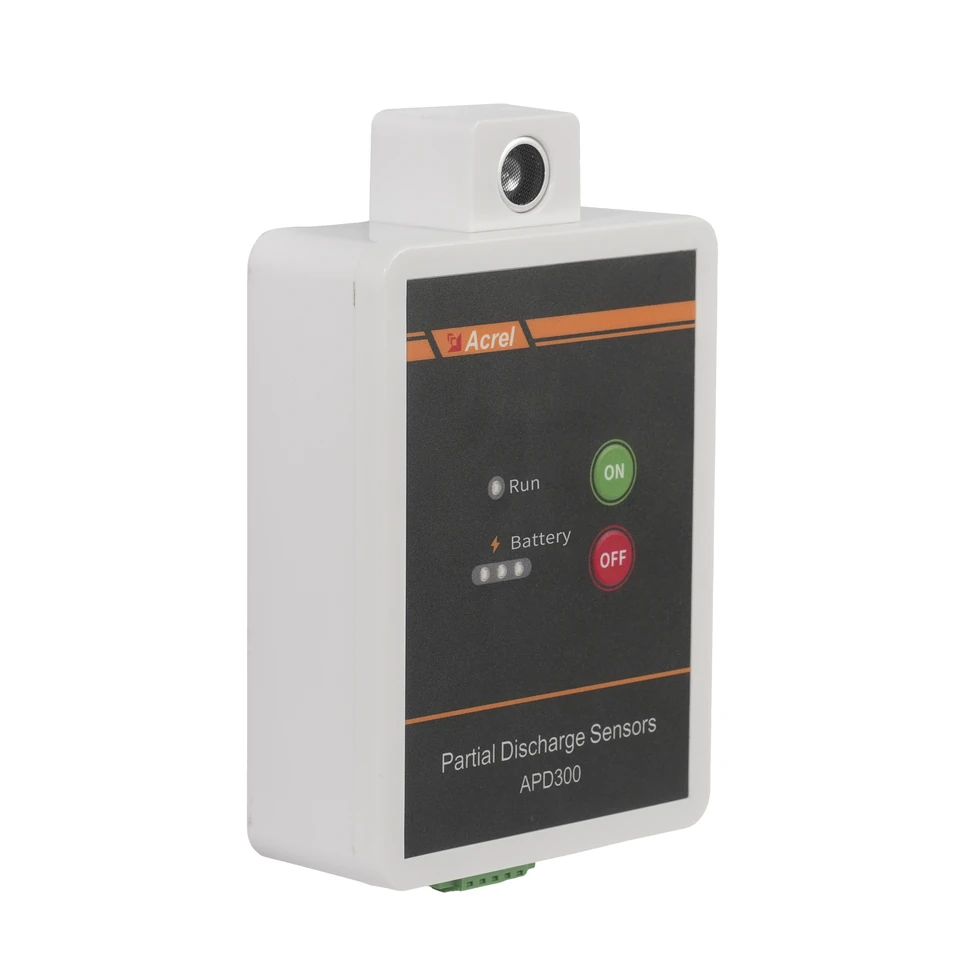 APD300-L product photograph extracted from the supplied catalogue.
PRODUCT IDENTITY
Catalogue record
- Source catalogue
- SST固态变压器配套产品明细.xls
- Original product name
- 局放传感器
- Catalogue model
- APD300-L
- Source location
- Sheet1, rows 8, 12, 17
- Catalogue installation location
- 中置柜 / 输入柜 / 功率柜
- Image source
- Sheet1!E8 · xl/media/image20.png
Source notes
- APD300-L is the wired variant. APD100, APD300-W and APD300-WP values are not combined into this entry.
- The APD100 table continues at the top of physical PDF page 7; the APD300 model table begins below it. The APD300 sensor table continues on page 8.
- dBµV, dBmV and dBm are retained as distinct source units; the different sensing channels must not be treated as interchangeable measurements.
01UHF, TEV and ultrasonic sensing
02RS485 Modbus RTU
031-second sampling cycle
PRODUCT OVERVIEW
Product information
APD300-L is the wired model in the APD300 table. It uses a DC 12-36 V supply with the stated power-conversion module, RS485 communication and magnetic installation on the inner wall of a switchgear cable compartment. Its UHF, TEV, ultrasonic and operating-environment parameters are taken from the APD300 sensor table.
Listed model
APD300-L
TECHNICAL DETAILS
Specifications and their sources
- Power supply
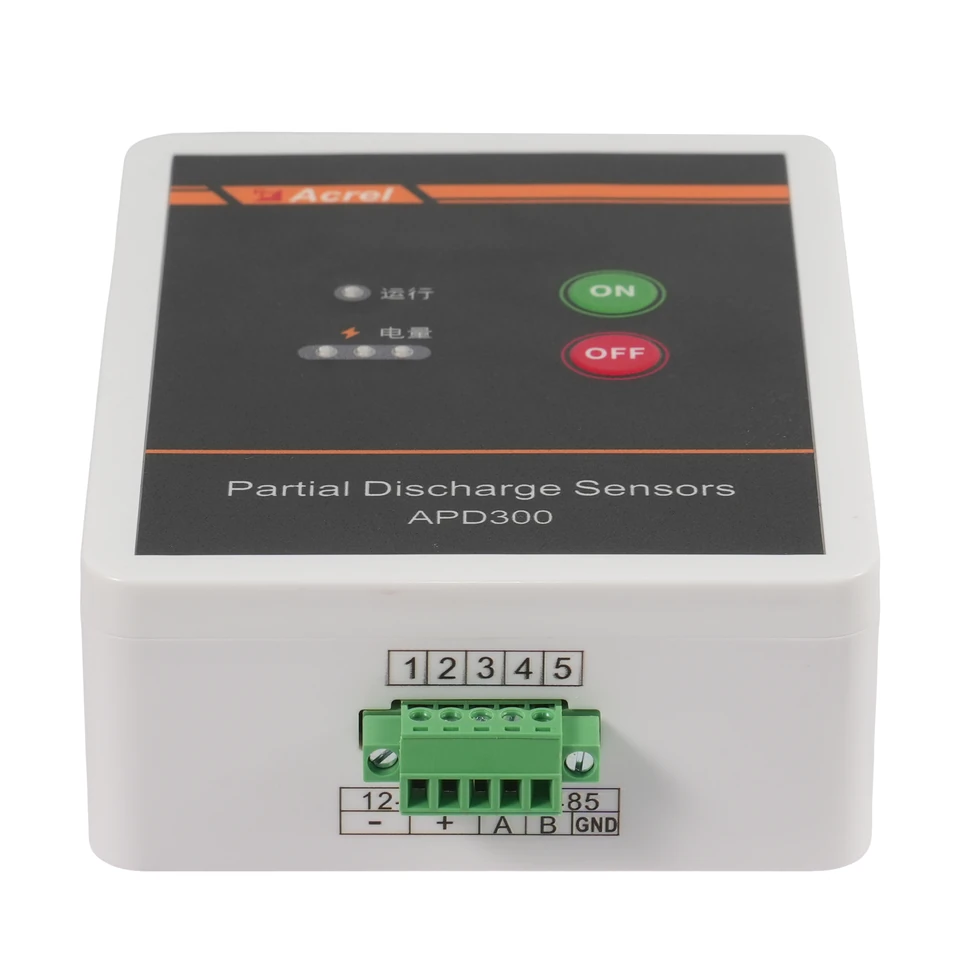
- DC 12-36 V; standard DC/AC 220 V /110 V to DC 24 V conversion moduleSource: APD V2.2, PDF p.7, section 1.3 APD300-L column
- Communication
- RS485, Modbus RTUSource: APD V2.2, PDF p.7, section 1.3 APD300-L column
- Sampling cycle
- 1 sSource: APD V2.2, PDF p.7, section 1.3 APD300-L column
- Ultrasonic AE
- 0-60 dBµV; resonant frequency 40 kHz ±1 kHzSource: APD V2.2, PDF p.8, PD monitoring sensors table, AE rows
- TEV
- 0-60 dBmV; signal bandwidth 3-100 MHzSource: APD V2.2, PDF p.8, PD monitoring sensors table, TEV rows
- UHF
- -70 to +10 dBm; 300-1500 MHz; average equivalent height ≥10 mmSource: APD V2.2, PDF p.8, PD monitoring sensors table, UHF rows
- Environmental measurements
- Noise 30-130 dB; temperature -40 to +85 °C; humidity 0-100% RHSource: APD V2.2, PDF p.8, PD monitoring sensors table, Environment rows
- Operating environment
- -40 to +85 °C; relative humidity ≤95% RHSource: APD V2.2, PDF p.8, Usage environment rows
- Dimensions / mounting
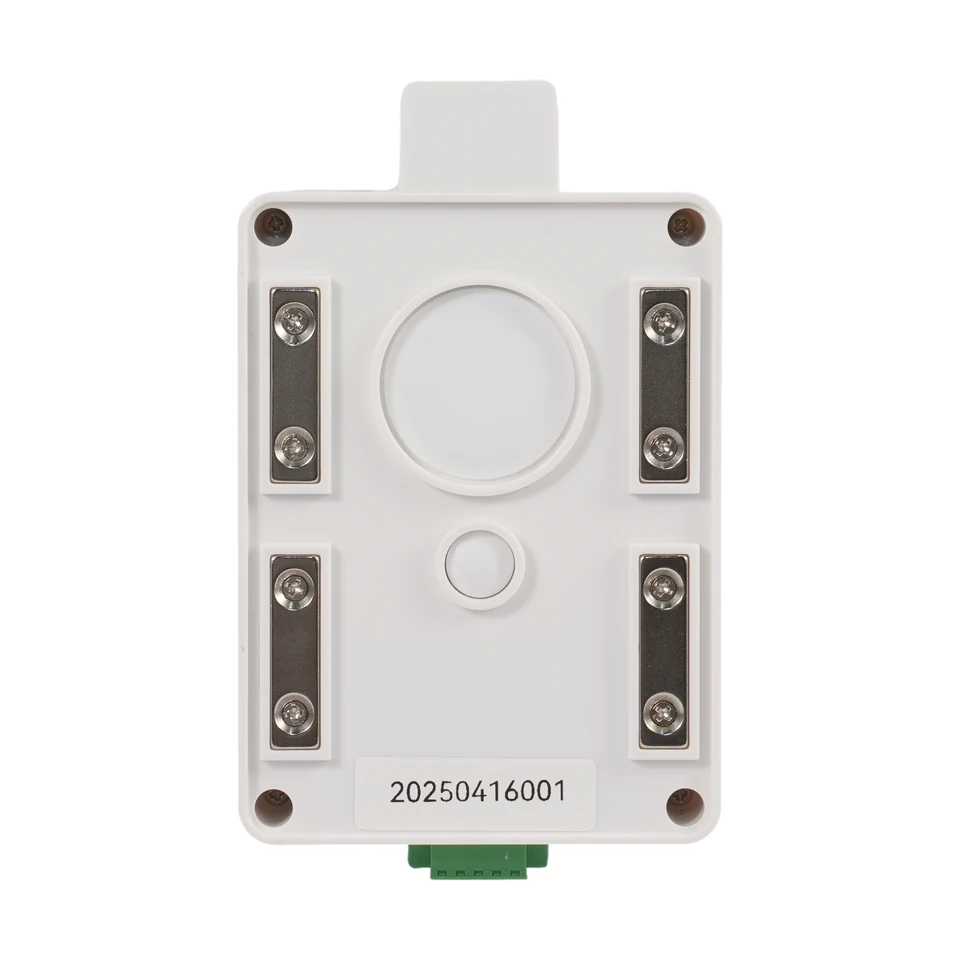
- 135 ×100 ×42 mm; magnetic mountingSource: APD V2.2, PDF p.8, Size and Installation rows
- Installation location — APD300-L
- Inner wall of the switchgear cable compartmentSource: APD V2.2, PDF pp.9-10, section 1.4.2 and Figure 1.4
CATALOGUE IMAGES
Additional views from the catalogue
CATALOGUE APPLICATION
Listed installation context
SOURCE DOCUMENTS
Original product manuals
APD Series Partial Discharge Detector — Operation Manual
Chinese / English · V2.2 · Relevant PDF pages 5, 7, 8, 9, 10
Download original manual ↓PRODUCT QUESTIONS
Questions about this model
Does APD300-L use the APD300-W battery and LoRa configuration?
No. APD300-L is listed as DC-powered with RS485 and a 1-second sampling cycle. Battery and LoRa entries belong to other APD300 variants.
Is its UHF bandwidth 300-1600 MHz?
The APD300 monitoring-sensor table specifies 300-1500 MHz. The separate 300-1600 MHz UHF-sensor specification in the manual belongs to the APD100 arrangement.
Which operating-temperature entry applies here?
The APD300 sensor table gives -40 to +85 °C. The -25 to +70 °C entry earlier in the manual is in the APD100 table and is not applied to APD300-L.
PROJECT SUPPORT
Evaluating APD300-L?
Send the application, voltage, required functions, quantity and target delivery date.
Send project requirements →